Begin with the link and the platform
An optical transceiver request needs more than a form factor and headline data rate. Reach, wavelength, fiber type, connector, lane arrangement, host platform, software, and coding can all affect suitability.
Information needed for quotation
| Area | Buyer input |
|---|---|
| Host | Equipment, slot or port, software or firmware, and coding requirement |
| Interface | Form factor, data rate, protocol, connector, and lane arrangement |
| Optical path | Reach, fiber type, wavelength or link specification, and mating path |
| Commercial | Exact reference, quantity, alternatives, and target delivery |
Compatibility is a separate check
Standards alignment and physical fit do not by themselves establish host recognition or full link behavior. Define the evidence required for the specific quotation.
Technical parameters and selection boundaries
Published configurations differ by manufacturer and exact part number. These are selection dimensions, not one combined specification.
| Parameter | Documented example or choice | Verify for this request |
|---|---|---|
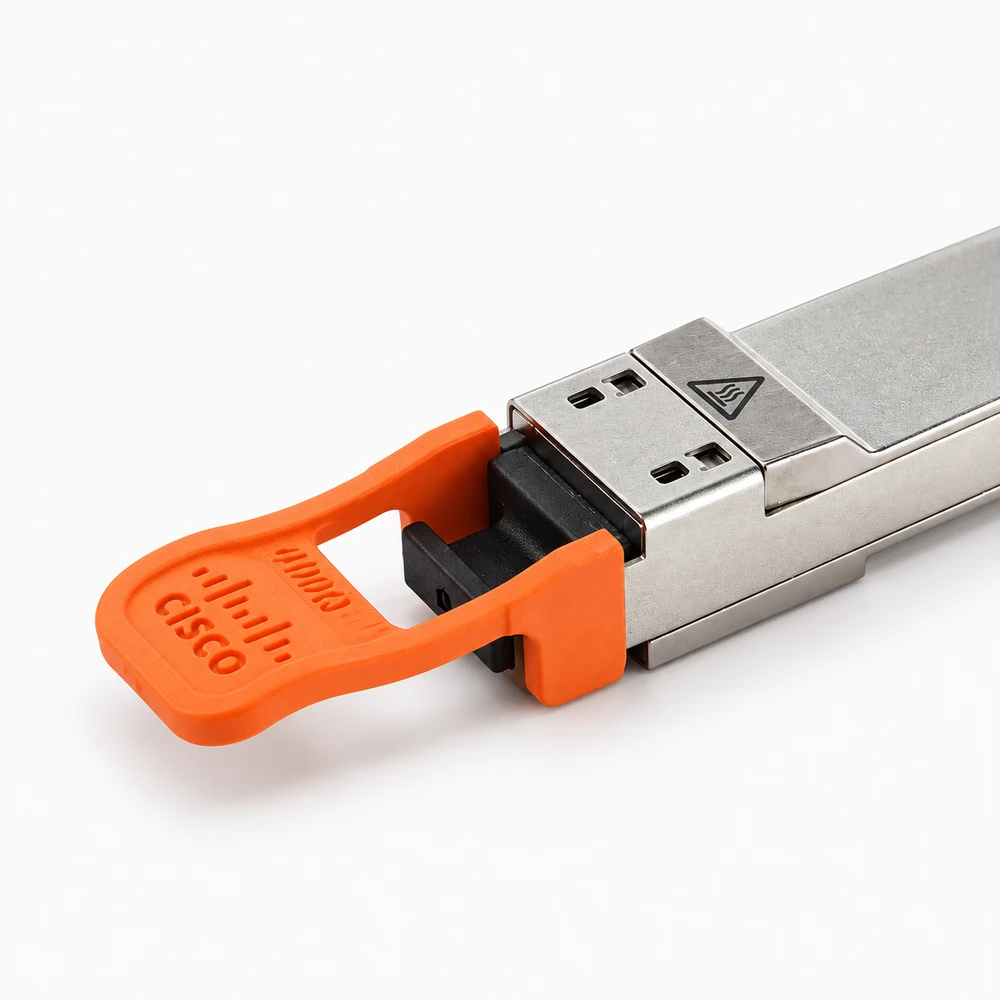
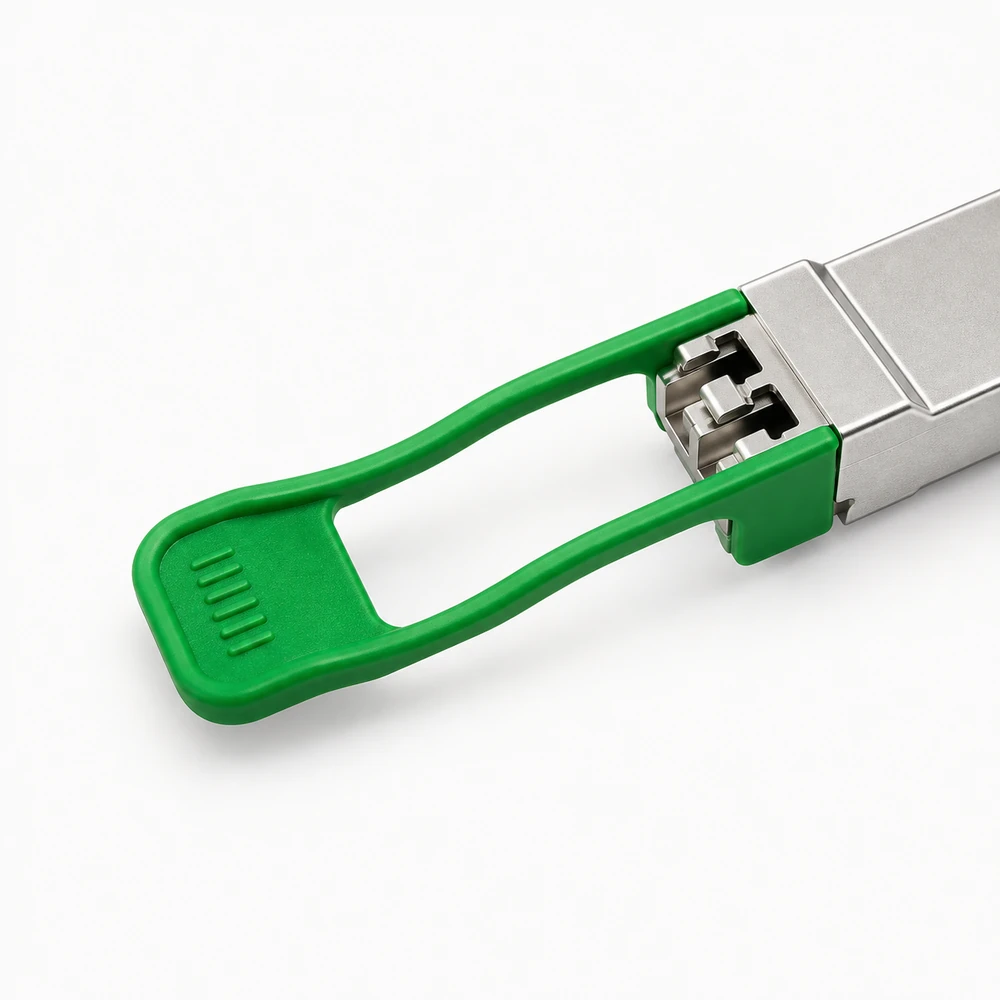
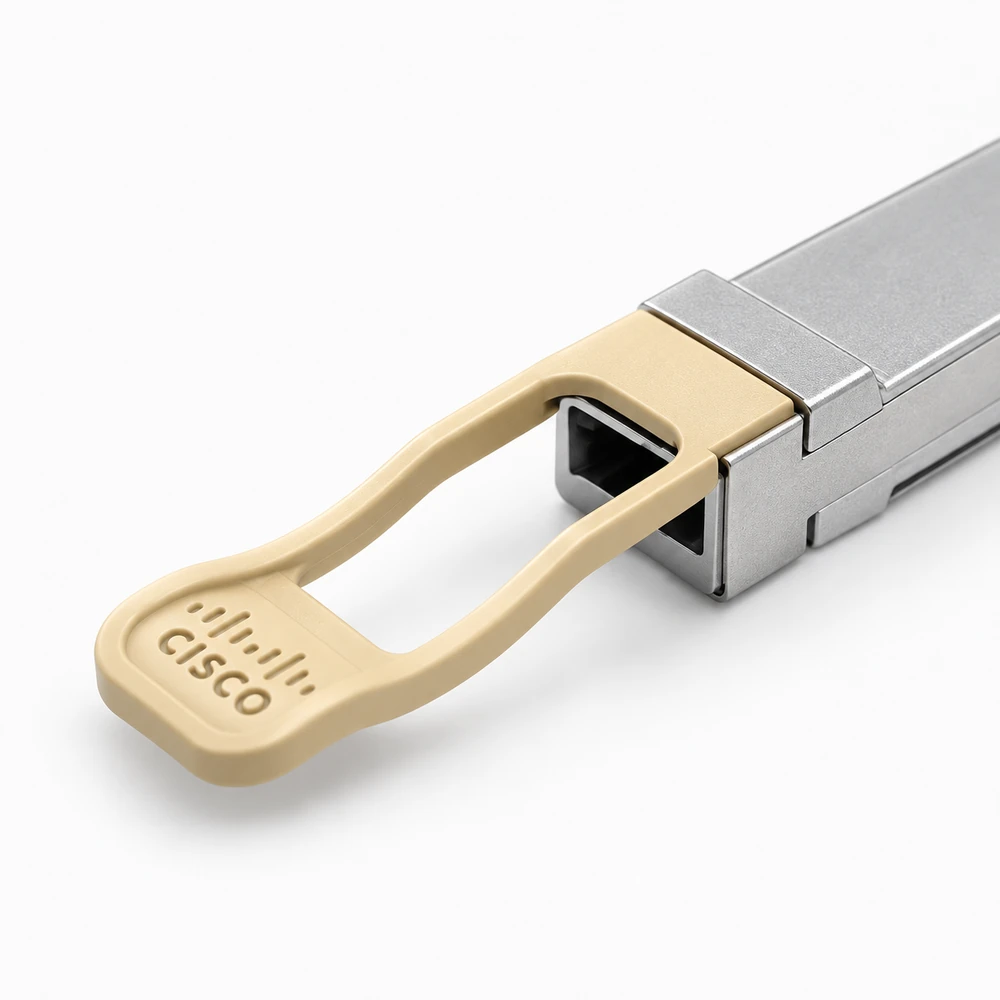
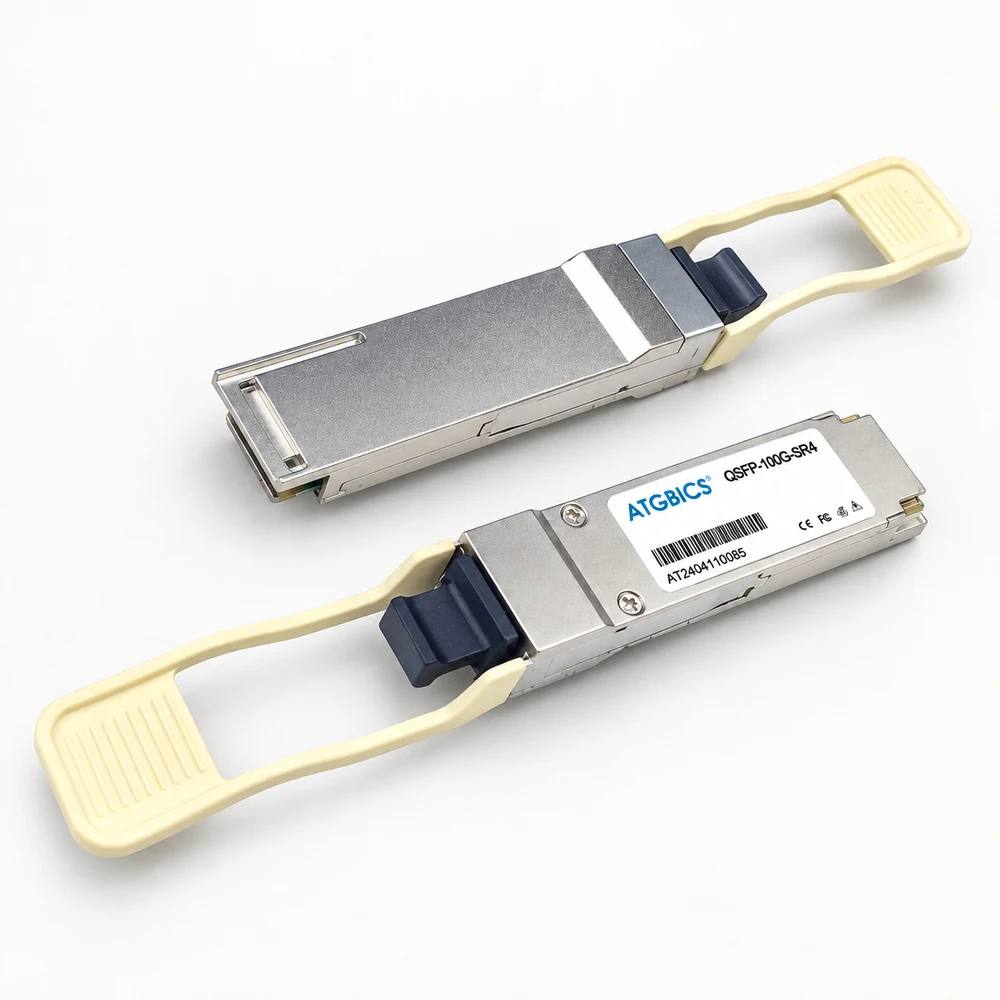
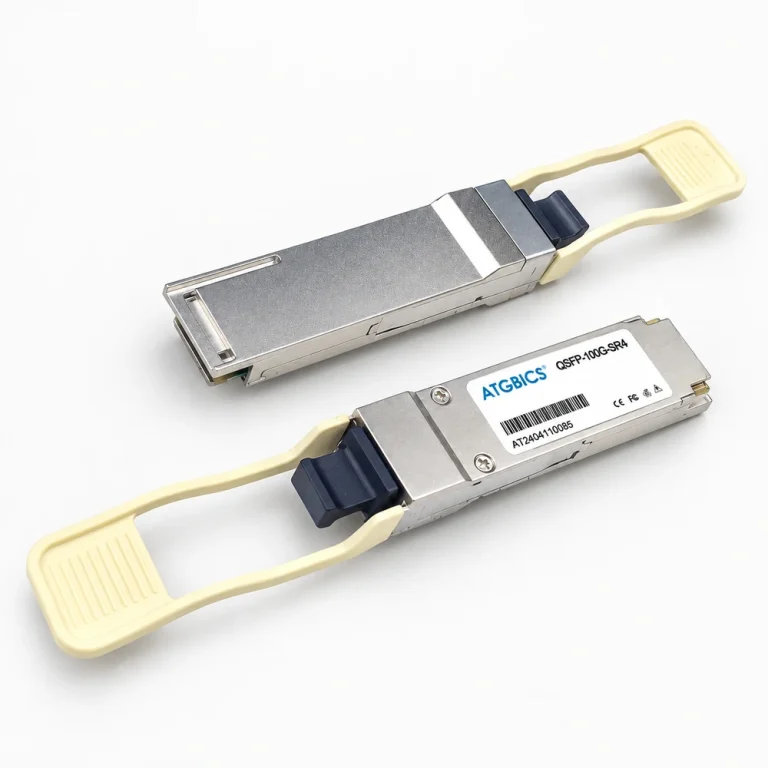
| Module and optical topology | Cisco QDD-2X400G-FR4 is a QSFP-DD example with two 400G-FR4 optical interfaces and dual duplex LC connections. | The reference photo on this Family page shows a different QSFP28 form-factor example; it is not a photograph of this Cisco model. |
| Fiber and supported reach | The named model specifies G.652 single-mode fiber and up to 2 km. | The reach applies to this module and the required channel conditions; it is not a general reach for all transceivers. |
| Nominal wavelengths | 1270, 1290, 1310 and 1330 nm are listed for the FR4 example. | Keep the wavelength plan and interface standard matched at both link endpoints. |
| Maximum module power | 17 W in the product table for QDD-2X400G-FR4. | Verify host-cage power and cooling support. This value is not a network switch or link-wide power budget. |
| Optical power per lane | Average transmit power: −3.2 to +3.5 dBm; average receive power: −7.3 to +3.5 dBm. | These are the named table limits, not interchangeable sensitivity, OMA or guaranteed system margin measurements. |
| Channel loss allowance | Maximum supported insertion loss: 4 dB for the named FR4 example. | Budget the complete installed fiber channel; connector cleanliness, splices, polarity and patching still require verification. |
| Temperature and weight | The datasheet lists module operation at 0–75 °C, storage at −40–85 °C and maximum module weight of 100 g. | These datasheet-level values apply to the listed 2×400G QSFP-DD range, not all OSFP/QSFP/SFP modules. |
Standard configurations and project options
| Configuration area | Documented option | Project decision |
|---|---|---|
| Choose the optical interface first | Specify duplex versus parallel fiber, exact interface standard, required reach and installed channel. | An LC or MPO connection is not an optional cosmetic substitute; a different topology requires a suitable module and matching endpoints. |
| Host and thermal qualification | Supply host model, cage/form factor, port mode, firmware, counterpart module and cooling limits. | Do not treat a form-factor match as platform approval or infer support for an arbitrary compatible-coded module. |
Representative models and configurations
Examples illustrate real product variation. A listed manufacturer or model is not a statement of our stock, authorization, or confirmed availability.
| Manufacturer / series | Published configuration | Important scope |
|---|---|---|
| Cisco QDD-2X400G-FR4 | QSFP-DD; 2×400G-FR4; dual duplex LC; G.652 SMF; up to 2 km; 17 W maximum listed power. | A specific official-datasheet example, not an availability or authorization claim. Confirm current hardware/firmware support before ordering. |
Applications and procurement context
- Use the named FR4 example when evaluating a two-port 400G optical deployment over a verified single-mode channel. Compare the complete module code, host configuration, optical topology, power and channel-loss budget together.
Compatibility, current supply, lead time, origin, and acceptance documents must be confirmed for the actual order.